

How To Repair An Old Lawn
Backyard repairs are generally for isolated areas of lawn where the rest of the lawn is satisfactory.
Whether or non you are pro-active with your lawn care you lot should be aware of three very important facts:
- Grass has phenomenal recuperative powers and in the correct atmospheric condition lawns can quickly repair themselves
- Weeds and weed grasses are survival experts and will often colonise damaged areas earlier your lawn tin can repair itself
- Dead grass or no grass cannot repair itself!
Therefore, e'er repair lawn damage at the earliest opportunity. One of the all-time things you can do is always have some grass seed on manus every bit a lite scattering on damaged areas can frequently mean grass instead of weeds. Some of the reasons a lawn repair may be required are:
Worn or compacted areas due to excessive utilise: Encounter Localised Lawn Aeration and always over seed
Thin or depleted grass embrace acquired by overhanging trees and bushes: Prick the area with a fork or score the surface with a rake, sprinkle in the right corporeality and blazon of seed, tread to firm the surface and continue watered to prevent from drying out. Can be washed from April to September.
Heavily Shaded Areas: Some areas of a backyard are so shady that the grass becomes very thin over a summertime or winter season. Grass won't survive in permanent shade then yous should either replace the grass with a plant that volition survive or over seed the expanse every spring. If taking the latter option, seed as early on every bit possible (late March to early Apr) well before the leaves come on the trees. This way the young grass shoots will get maximum lite and establish well before the lite levels fall.
Areas that suffer premature drying: This may be acquired by localised compaction, trees or a fungal illness in the soil known as 'dry patch'. Open the soil upward or take a sample from the afflicted surface area and if you see white specks then it'southward a fungal disease. Quite oft calculation a wetting amanuensis to areas that prematurely dry tin aid water penetration and improve the water property capacity of the soil.
For more advice read Dry Patch in Pests & Diseases and Localised Backyard Aeration
Bumps and Hollows: Very slight undulations tin be solved with Height Dressing just anything more 1/2″ needs a dissimilar process.
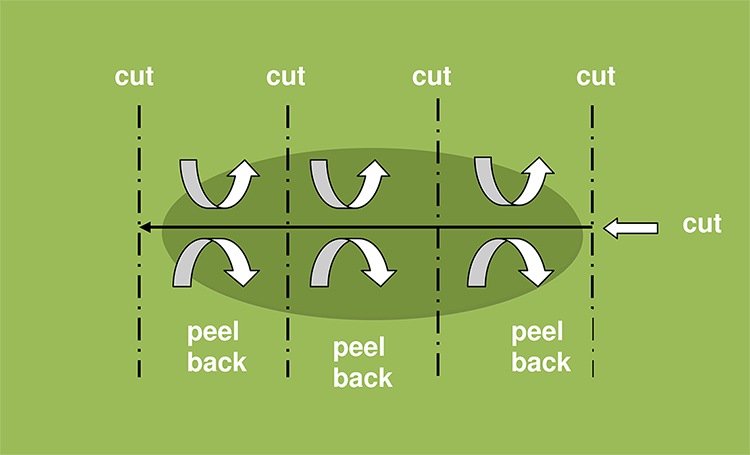
Small ones can be sorted by slicing into the turf with a spade all along the length of the bump or hollow 1" to 2" deep. Then do the same at right angles. Next push the spade underneath the turf to cut the grass roots so that the turf tin exist peeled back in strips. Finally, remove or add soil, firm past treading, so fold back the turf and tamp down with the spade. If adding soil try and employ soil from the borders or at least a similar soil to that in the lawn.
Larger bumps and hollows crave the turf to be removed completely, soil added or removed and then re-turfed or seeded. You volition detect new turf is considerably easier to lay than your removed turf simply it may be hard to match. Seeding the expanse may offer a better grass friction match.
Caution: Practice not fill hollows by putting soil on top of turf then re-seeding or turfing. The expanse will dry chop-chop and may well not survive. Remove the one-time turf first.
Damage from tree roots: As tree roots abound they thicken often forcing the lawn surface up or even becoming exposed themselves. If the problem is minor then light and frequent meridian dressings to build up the lawn surface to cover the root should do the trick. Come across Elevation Dressing
For more severe issues splicing open the turf, folding and rolling it back and removing the root may be required. As this may impact on the health of the tree consulting with a Tree Surgeon would be wise. In one case removed, the empty space should then be filled with like soil (take some from the borders if possible), firm by treading and so the turf rolled back into place and tamp downwards with the spade.
Urine damage from pets or foxes: Rake out the expressionless grass making sure the soil is well scored. Sprinkle in 10 seeds per inch, tread to firm and keep from drying out by frequent calorie-free watering.
Mole Hills and Fairy Rings: See Pests & Diseases
Mowing after repairs should be as normal for an established lawn. Sharp blades are beneficial.
E'er keep renovated areas well watered for several weeks to aid recovery.
Browse Grass Seed for Lawns
Scan Aerating & Scarifying tools

How To Repair An Old Lawn,
Source: https://www.lawnsmith.co.uk/lawn-care-advice/repair-renovation/repairing-the-lawn
Posted by: rossgother1977.blogspot.com
0 Response to "How To Repair An Old Lawn"
Post a Comment